
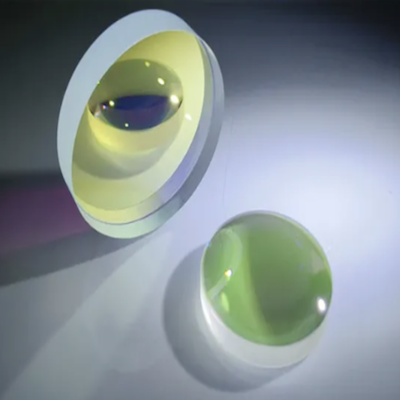
Are Aspheric Lenses Always the Better Choice?
In recent years, more and more optical designs have started incorporating aspheric lenses. The reason is simple: a single aspheric lens can sometimes replace two or three spherical elementswhile maintaining or even improving optical performance.
This approach has proven highly effective in infrared optics and laser systems. However, when it comes to vision and imaging applications, the advantages of aspheric lenses are not always so clear-cut.
Aspheric lenses excel at correcting spherical aberration, especially in wide-angle and large-aperture designs. From a pure performance standpoint, they are impressive.
But based on our team’s real-world project experience at Ashley Tech, the performance gains from adding an aspheric element don’t always justify the significantly higher cost. In practice, an aspheric lens typically costs about twice as much as a comparable spherical lens.
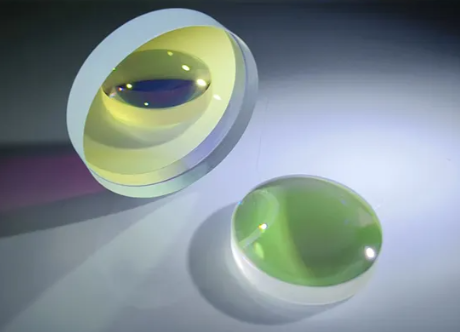
Understanding Spherical Lenses First
Spherical lenses have a constant radius of curvature across the entire surface. Depending on their shape, they either converge or diverge light:
- Concave lenses: diverge light and form virtual images
- Convex lenses: converge light and form real images (and sometimes virtual ones). Real images are sharply focused, while virtual images are typically magnified.
The biggest advantages of spherical lenses are: mature manufacturing processes and lower cost. For many cost-sensitive imaging applications, spherical lenses remain the go-to choice—especially when scalability, reliability, and cost-efficiency are top priorities.
The Ashley Tech Design Philosophy
Every time our team starts a new optical project, we ask ourselves one question first:
“Is adding an aspheric lens really necessary?”
Based on our years of design and production experience, our conclusion is:
Aspheric optics are not a universal solution.
They have their place, but adding one doesn’t automatically make a system better. In many cases, the simplest, most proven solution delivers the best overall results.
A well-designed spherical lens system often offers:
- Sufficient image quality
- Lower cost
- Easier manufacturing and scalability
Together, these factors make spherical lenses the most practical choice for many vision applications.
Summary
| Comparison | Spherical Lenses | Aspheric Lenses |
|---|---|---|
| Cost | Low | High (~2x) |
| Manufacturing | Mature & simple | Complex |
| Aberration correction | Moderate | Excellent |
| Best for | General imaging, mass production | High-precision, special designs |
Ashley Tech’s recommendation: If your project demands ultra-high precision and you have the budget, aspheric lenses are a great option. But for most standard vision applications where performance and cost need to be balanced, a high-quality spherical lens solution is often the smarter choice.
Have an optical design project in mind? Contact Ashley Tech—we’ll help you find the right solution.